Bundala National Park
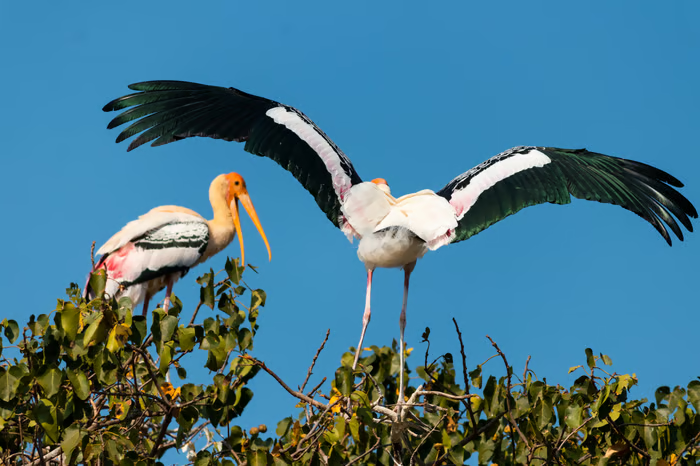
Best time
November to March for peak migratory bird activity and pleasant weather.
Ideal stay
1 day or half-day safari
Altitude
Lowland coastal plains near sea level
Climate
Warm and dry most of the year, with monsoon rains in October to December.
History
How Bundala National Park became one of Sri Lanka’s most memorable destinations
Bundala was declared a national park in 1993 and later recognized as a Ramsar wetland site.
Its lagoons and scrub forests have long supported migratory bird routes across Asia.
Today it is one of Sri Lanka’s most important wetland conservation areas.
Significance
Why Bundala National Park matters in Sri Lanka’s story
A globally significant wetland for migratory birds, including greater flamingos.
One of the best places in Sri Lanka for birdwatching and wetland ecology.
A vital habitat for crocodiles, elephants, and diverse coastal wildlife.
Top attractions
Essential stops for your Bundala National Park itinerary.
Bundala Lagoons
Shallow lagoons filled with flamingos, storks, and water birds.
Flamingo Flocks
Seasonal gatherings of greater flamingos during migration.
Salt Pans
Open landscapes with dramatic light and bird activity.
Elephant Sightings
Occasional elephants appear near forest edges.
Crocodile Lagoons
Mugger crocodiles often bask along the lagoon banks.
Coastal Dunes
Wild beaches and dunes inside the park boundary.
Scrub Forest Trails
Short tracks through dry-zone scrub and thorn forest.
Sunset Safari Views
Golden light across lagoons and open plains.
When to Visit
- November to March is peak season for migratory birds and flamingos.
- April to June offers fewer crowds and good general wildlife sightings.
- October and December are wetter, with lush wetlands but muddy tracks.
What to Wear
- Light, breathable clothing in neutral tones.
- A hat, sunglasses, and sunscreen for open wetland areas.
- Closed shoes and a light layer for early or late safaris.
How to Get There
- Private car from Colombo via the Southern Expressway (about 4.5 to 5.5 hours).
- Drive from Tangalle, Tissamaharama, or Yala safari bases.
- Bus to Hambantota or Tissamaharama, then taxi or tuk-tuk to the gate.
Location Map
Plan your route to Bundala National Park
Photo Gallery
Highlights of Bundala National Park
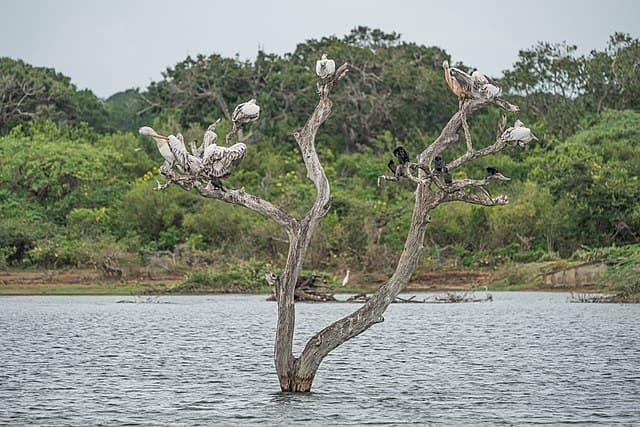
Bundala’s lagoons attract huge flocks of birds.
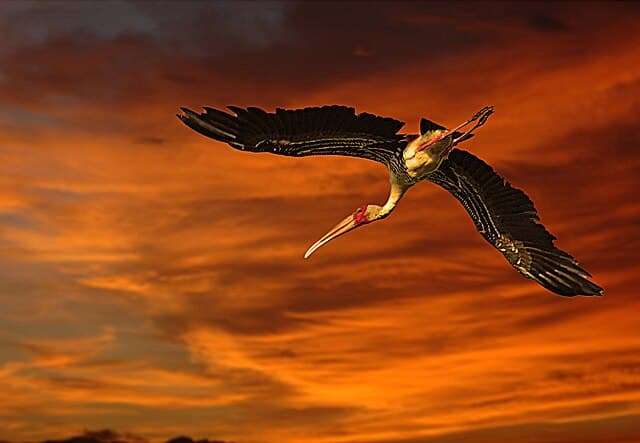
Flamingos are a highlight in the migratory season.
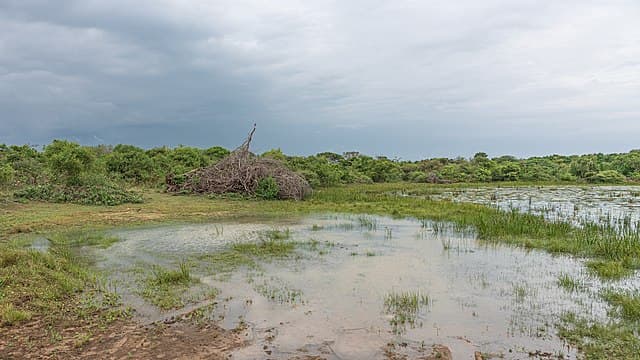
Quiet safari drives reveal wetlands and scrub forest.
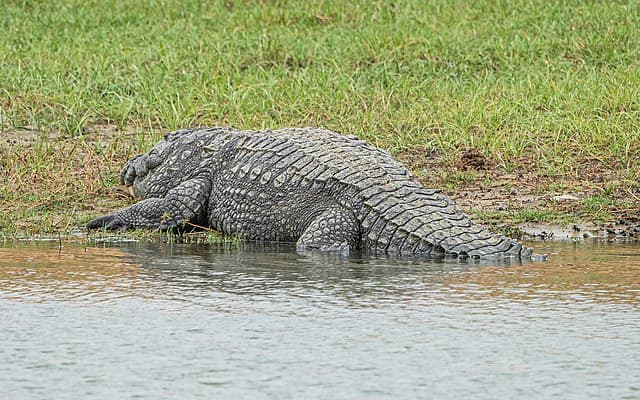
Crocodiles often bask near the water’s edge.
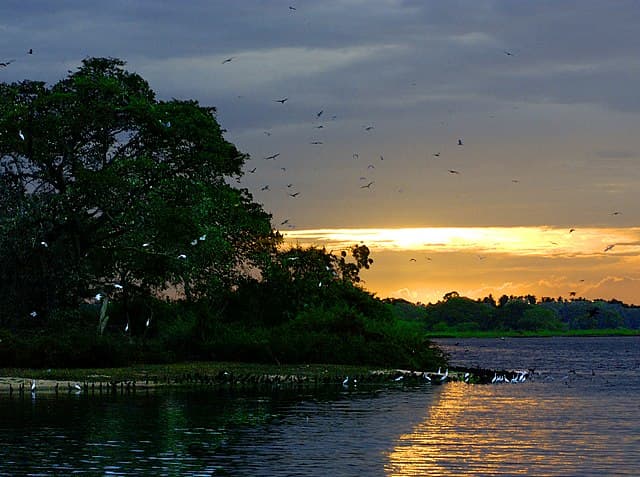
Salt pans glow during golden-hour safaris.
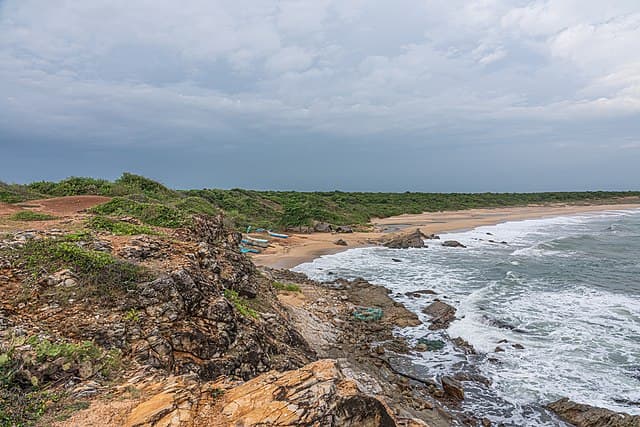
Wild dunes and beaches sit within the park boundary.
Signature Experiences
- Spot flamingos and migratory birds at dawn around the lagoons.
- Enjoy a quiet safari in a low-crowd wildlife sanctuary.
- Photograph salt pans and wetland landscapes at sunset.
- Combine Bundala with Yala or Udawalawe for a wildlife circuit.
- Watch crocodiles and water birds in their natural habitat.
Travel Tips
- Bring binoculars for birding and distant sightings.
- Start early to avoid heat and catch peak bird activity.
- Pack water and sun protection for open wetland areas.
Nearby Attractions
Short trips from Bundala National Park
Tissamaharama
25 kmLakeside town and safari base with hotels and cafés.
Yala National Park
45 kmLeopard-focused safari destination nearby.
Hambantota
20 kmCoastal town with markets and a harbor promenade.
Kataragama
45 kmPilgrimage town with multi-faith temples.
What to Visit Next
Recommended stops after Bundala National Park
Getting Around
- Safari jeeps are required inside the park.
- Tuk-tuks and taxis connect nearby towns to the gate.
- Private drivers help link Bundala with Yala or the coast.
Connectivity & Essentials
- Mobile signal is limited inside the park; strongest near entrances.
- ATMs are available in Hambantota and Tissamaharama; carry cash.
- Power outlets are UK-style Type G; bring an adapter if needed.
Facilities Available
- Ticket counters and basic restrooms at the entrance.
- Small eateries and shops in nearby towns.
- Guesthouses and safari lodges around Tissamaharama.
Where to Stay
- Tissamaharama for the best range of safari bases.
- Hambantota for coastal services and easy access.
- Kirinda for quieter coastal stays near wildlife parks.
- Yala-area lodges for a combined wildlife itinerary.
Cost of Living
- Safari costs include jeep hire and park entry fees.
- Budget guesthouses are common; lodge stays are mid-range.
- Local meals are affordable, with higher prices near resorts.
Culture & Etiquette
- Keep noise low around birding areas.
- Respect conservation rules and avoid disturbing wildlife.
- Dress modestly when visiting nearby temples or towns.
Safety & Health
- Stay inside the vehicle during safaris and follow guide advice.
- Use sun protection and hydrate in warm conditions.
- Apply insect repellent for early mornings and evenings.
Important to Know
- Birdwatching is best early morning when the lagoons are most active.
- Safari access requires a licensed jeep and park tickets.
- Some tracks can be muddy after rain; allow extra time.
- Carry cash for tickets and tips; card payments are limited.
Plan Your Visit to Bundala National Park
Design a safari-focused trip with wildlife drives, wetlands, and national park highlights.