Horton Plains National Park
Best time
January to April for clearer mornings and the best World’s End views.
Ideal stay
1 day (early start) or 1 night nearby
Altitude
Approx. 2,100–2,300 m above sea level
Climate
Cool, misty, and windy with cold mornings and frequent cloud cover.
History
How Horton Plains National Park became one of Sri Lanka’s most memorable destinations
Horton Plains was declared a protected area in the late 19th century and a national park in 1988.
The plateau is part of Sri Lanka’s central highlands UNESCO World Heritage site.
Its unique montane ecosystem shelters endemic flora and fauna found nowhere else on the island.
Significance
Why Horton Plains National Park matters in Sri Lanka’s story
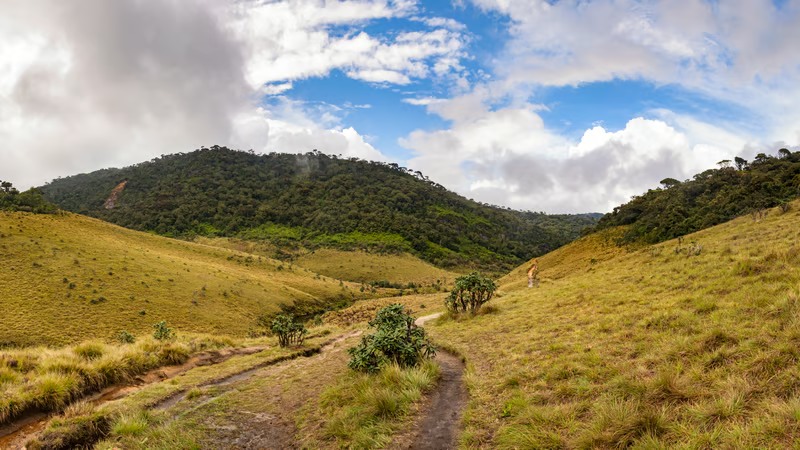
A rare high-altitude ecosystem with cloud forests, peat bogs, and grasslands.
Home to endemic species like the purple-faced langur and sambar deer.
The source area for major rivers including the Mahaweli, Kelani, and Walawe.
Top attractions
Essential stops for your Horton Plains National Park itinerary.
World’s End
A dramatic 800m drop with panoramic views on clear mornings.
Baker’s Falls
A scenic waterfall reached along the main loop trail.
Horton Plains Loop Trail
9–11 km circular hike through grasslands and cloud forest.
Mini World’s End
A smaller cliff-edge viewpoint on the route.
Sambar Deer Sightings
Often spotted grazing near the trailhead.
Cloud Forest Habitat
Moss-covered trees and rare montane plants.
Highland Birdwatching
Look for endemics like the Sri Lanka whistling thrush.
Sunrise Trail Start
Early trail start for clear skies and crisp air.
When to Visit
- January to April offers the clearest mornings and best visibility.
- May to September is cooler and windier with more cloud cover.
- October to December is wetter and mistier, with fewer visitors.
What to Wear
- Warm layers for cold mornings and windy viewpoints.
- Comfortable hiking shoes with good grip for uneven trails.
- A light rain jacket for sudden mist or showers.
How to Get There
- Drive from Nuwara Eliya (about 1 to 1.5 hours) via Ambewela.
- Private car from Kandy (about 3 to 4 hours) through the hill country.
- Limited buses to Ohiya, then tuk-tuk or taxi to the park entrance.
Location Map
Plan your route to Horton Plains National Park
Photo Gallery
Highlights of Horton Plains National Park
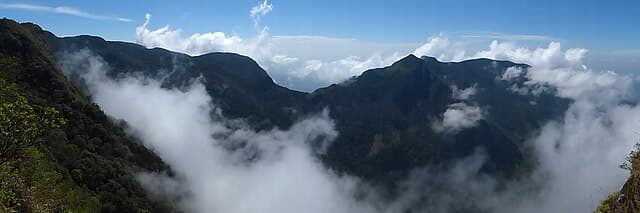
World’s End is best seen early before the clouds roll in.
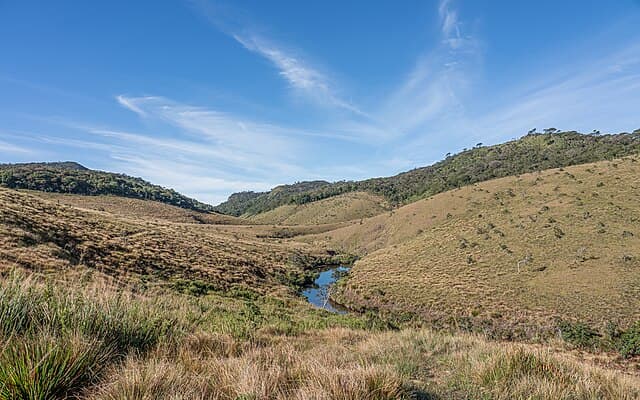
Rolling grasslands define the high plateau.
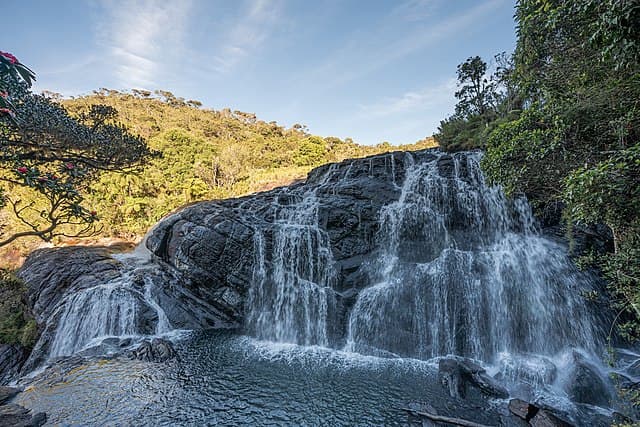
Baker’s Falls is a scenic stop along the loop trail.
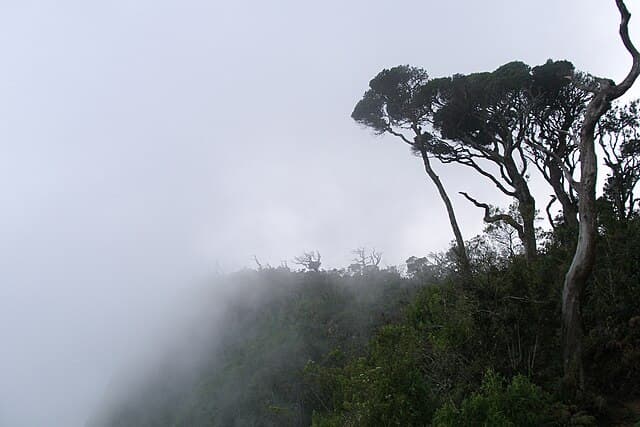
Trails weave through misty cloud forest corridors.
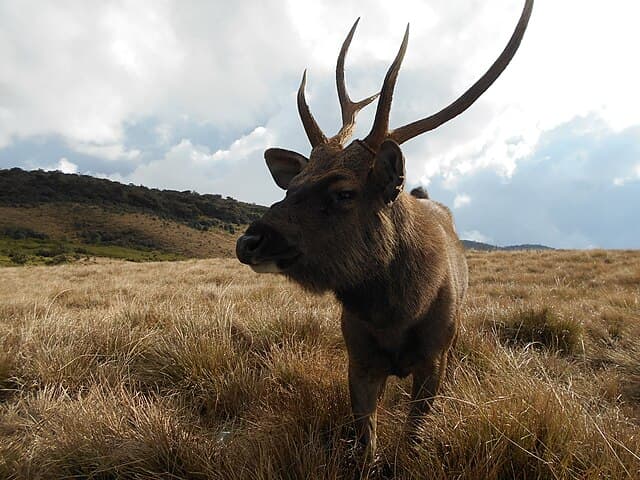
Sambar deer are often spotted at the start of the hike.
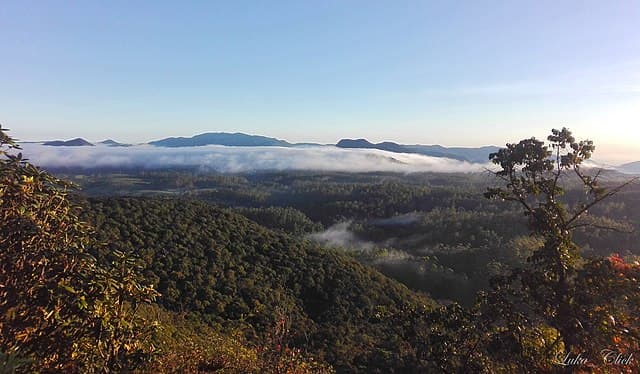
Early mornings bring crisp air and soft light.
Signature Experiences
- Start before sunrise to reach World’s End in clear conditions.
- Hike the full loop for Baker’s Falls and montane scenery.
- Photograph misty grasslands and cloud forest trails.
- Watch for sambar deer and highland bird species.
- Pair Horton Plains with a Nuwara Eliya tea estate stay.
Travel Tips
- Start the hike at dawn to beat the clouds and crowds.
- Bring water and light snacks; facilities are limited on the trail.
- Use sunscreen even in cool weather at high altitude.
Nearby Attractions
Short trips from Horton Plains National Park
Nuwara Eliya
32 kmColonial hill town with tea estates and gardens.
Ohiya
17 kmSmall hill village and a station on the scenic rail line.
Ambewela Farm
20 kmDairy farm with open plains and mountain views.
Hakgala Botanical Garden
38 kmHighland gardens with orchids and roses.
What to Visit Next
Recommended stops after Horton Plains National Park
Getting Around
- The main loop trail is on foot; there are no internal shuttles.
- Tuk-tuks or drivers are used to reach the park entrance.
- Base in Nuwara Eliya for the easiest early start.
Connectivity & Essentials
- Mobile signal is limited inside the park; strongest near the entrance.
- ATMs are available in Nuwara Eliya; carry cash for entry fees.
- Power outlets are UK-style Type G; bring an adapter if needed.
Facilities Available
- Ticket counters and basic restrooms at the park entrance.
- Small kiosks for snacks and water near the entry area.
- Medical facilities are in Nuwara Eliya; carry basic first aid.
Where to Stay
- Nuwara Eliya for the widest range of accommodations.
- Ohiya for a quiet base near the park entrance.
- Tea estate bungalows for a highland immersion.
- Hatton for combining Horton Plains with Adam’s Peak.
Cost of Living
- Entry fees are the main cost; hiring a driver adds to expenses.
- Nuwara Eliya offers a range of stays from budget to heritage bungalows.
- Local meals are affordable, while high-end restaurants cost more.
Culture & Etiquette
- Keep noise low to respect wildlife and other hikers.
- Do not litter; carry all waste out of the park.
- Dress modestly in nearby towns and temples.
Safety & Health
- Stay on marked trails and avoid cliff edges at World’s End.
- Wear warm layers to prevent chills in windy conditions.
- Be cautious on wet or muddy sections after rain.
Important to Know
- Arrive early (before 7am) for the clearest World’s End views.
- The loop trail is 9–11 km and can take 3 to 4 hours.
- Temperatures can be cold and windy; pack warm layers.
- Carry cash for park entry and small vendors at the entrance.
Plan Your Visit to Horton Plains National Park
Design a safari-focused trip with wildlife drives, wetlands, and national park highlights.